Why “Just Listen to Your Body” is Often a Bad Advice
The “Anti-Wearable” Trend
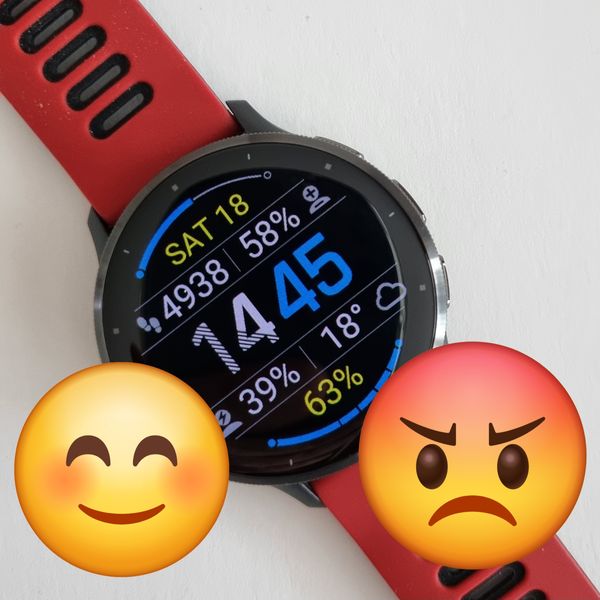
Recently I often see statements claiming that wearables-smartwatches and fitness trackers-don’t deliver results or are even counterproductive. “Just listen to your body,” “just go for a run,” or “just eat less” is supposedly the only advice you really need.
Is that right? I think the answer is more often “no” than “yes.” Let me explain why.
Why they are Often Wrong
A significant portion of these posts and videos are just clickbait. Almost everyone uses wearables now, so contradicting the mainstream brings novelty and attracts clicks-the same way people claim “you’re brushing your teeth wrong” or “you’re filling your dishwasher wrong.”
Another group consists of tech reviewers or influencers who know very little about health and fitness. Usually, it is easy to spot these authors and ignore their opinions. At least for this subject.
Then there is a third group: people who do know about health and sport. They often used wearables for a while but eventually stopped. Does their opinion matter? To an extent.
You Are Not a Pro (Yet)
Every good trainer will tell you that trying to follow the exact program of the strongest guy in the gym or the fastest swimmer in the pool makes no sense. You aren’t them. Their program won’t work for you. By the way, every serious youtuber or blogger will do the same; if they do not, stop watching/reading them.
The same logic applies here. An experienced runner already understands their body’s feedback. Someone who has tracked calories for years can eventually “feel” the balance. I can do this to some degree now, too – but “now” is the key word.
When I first started learning about calories and training, I had no idea how to actually achieve a “calorie deficit.” I understood the concept, but how do I apply it? The same went for “Zone 2” or HIIT. These things look good on paper, but they aren’t easy to apply to a unique you.
Without guidance, the cost of error ranges from the frustration of seeing no results to actual injury.
The Wearable as a Teacher
This is where a wearable becomes truly helpful. Yes, calorie estimations aren’t perfectly accurate, but they give you a baseline. Do I burn 1,500 calories a day or 3,000? Will a 30-minute run compensate for that pizza?
The same goes for running and HIIT. Tools like Garmin Coach help build a program for you, which will be reasonably personalized. It might not be “perfect,” but if you don’t have years of experience or a good personal trainer, it will likely be much more efficient than anything you try on your own.
The Bottom Line
Here is the key: health wearables are tools to help you build-safely and efficiently-the experience and ability to understand your body. Eventually, you might reach a level where you don’t “need” them anymore.
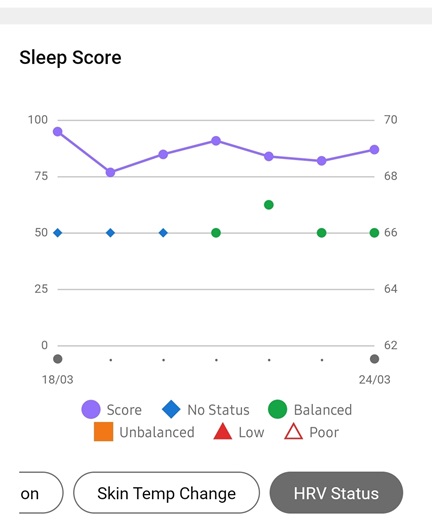
But even then, I find them valuable. Tracking long-term changes in resting HR, VO2 Max (even if it’s just an estimate), and HRV, or having the chance to catch dangerous anomalies like Afib (wearables do this pretty well), makes a smartwatch worth it. At least for me.